
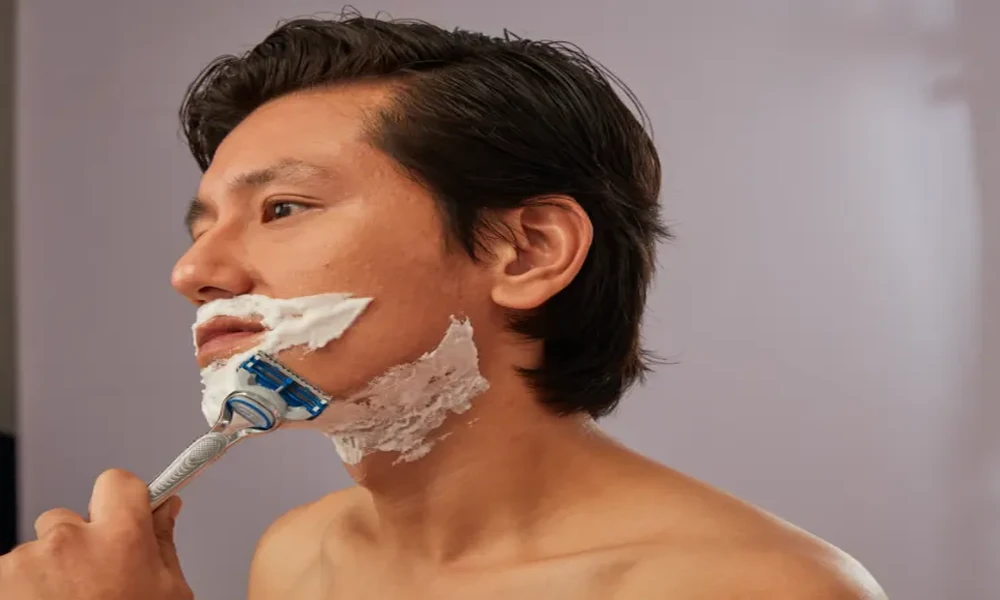

For an ordinary shave, move the razor in the direction the hair grows rather than repeatedly going back and forth over the same skin. The Canadian Dermatology Association recommends that approach alongside wet skin, shaving cream or gel and dry razor storage. A patch that feels less smooth when rubbed backwards is not, by itself, a reason to reverse the blade again.
Frustration with frequent shaving can lead a Vaughan reader to consider Elysium Beauty’s laser hair removal service. There is also a smaller decision inside the existing routine: how to handle the next ordinary shave. Improving that handling does not require choosing a professional treatment, buying a larger kit or turning the bathroom mirror into an inspection station.
Find the direction before making another pass
“With the grain” is useful shorthand only if you know what it means where you are shaving. Look at the direction the hair lies rather than assuming that one downward motion follows growth across the whole area. The relevant direction belongs to the hair, not to the top and bottom of the room.
This is especially easy to forget when a shave has become automatic. A hand repeats the route it learned years ago, then reverses it to catch anything that feels rough. Before repeating that pattern, pause long enough to notice what the hair is doing. You are observing an ordinary grooming direction, not diagnosing a skin condition.
The CDA’s hair-removal advice specifically recommends shaving in the direction of growth and avoiding back-and-forth movements in multiple directions over shaved sites. That gives the routine a practical boundary. Repeatedly changing direction is not an extra finishing step that must be completed to make the shave count.
A familiar checking habit can make that boundary difficult to keep. Someone runs a hand one way, feels little, runs it the other way and discovers a texture they dislike. The second sensation can trigger another pass even after the planned shave was finished. Recognising the sequence helps separate a preference for absolute smoothness from the action the guidance actually recommends.
Do not turn this into an invitation to keep shaving irritated or injured skin more carefully. If there is a persistent problem, stop treating it as a technique contest and obtain appropriate advice. The purpose of direction-aware shaving is ordinary handling; it does not identify the cause of bumps, redness or pain, or guarantee that those problems will disappear.
It can also help to decide what task you are doing before starting. Removing the hair you normally shave is a finite activity. Testing the area from every angle until no texture can be detected has a much less definite ending. The latter standard can quietly add passes that were never part of the original intention.
Water and shaving product belong before the blade
Preparation is not something to add after a dry first attempt becomes uncomfortable. The CDA recommends wetting the skin before shaving and using shaving cream or gel. Put those steps ahead of the blade rather than taking a quick dry pass because the razor is already within reach.
A rushed morning makes the order easy to reverse. You notice a missed strip while getting dressed, pick up the razor and tell yourself that the area is too small to need preparation. The size of the unfinished task does not change what wet preparation means. Let the razor wait while you organise the ordinary supplies.
Make the product easy to identify, especially if several similar containers share a shelf. A bottle being convenient does not make it the shaving product you intended to use. Read its directions and avoid treating an unfamiliar cosmetic as an interchangeable substitute merely because it feels slippery.
There is no need to create an elaborate ritual around this advice. The practical improvement is the sequence: skin and appropriate shaving product first, then the shave. A bathroom arrangement that keeps the product beside the razor can make that sequence easier to remember than a new list saved on a phone in another room.
Equally, do not borrow this everyday routine as preparation for a medical or cosmetic procedure. If a provider has given instructions for an appointment, use the instructions that apply to that procedure and resolve any uncertainty with them. A general grooming article cannot decide when or how an individual should prepare treated skin.
Keep expectations proportionate. Wet preparation and growth-direction strokes are concrete changes you can make to an ordinary shave; they are not proof that every skin complaint has a home solution. If the routine repeatedly leaves you uncomfortable, describe the problem to an appropriate healthcare professional instead of adding more products and more passes at once.
Finish by giving the razor a dry place
The shave has a final handling step after the blade leaves the skin. The CDA advises storing the razor in a dry area. Think about where yours actually ends up: a wet ledge, the bottom of the shower or a holder away from the persistent spray. The name of the holder matters less than the conditions around it.
A tidy bathroom can still contain a poor drying arrangement. A razor placed neatly in a puddle has been put away without reaching a dry place. Look at the surface after the water has run, rather than judging the setup while everything is unused and dry.
Choose a practical storage spot that remains accessible without staying continuously wet. Follow the razor manufacturer’s cleaning and handling directions, and do not improvise a cleaning treatment because it sounds stronger. The everyday goal here is uncomplicated: finish the cleaning required for that razor, then store it where it can remain dry.
If other people use the bathroom, make the location understandable enough that ordinary tidying does not keep returning it to the wet ledge. A routine works better when its final place is obvious. You should not have to search through miscellaneous cosmetics to find the tool each morning.
Putting the razor away can also mark the end of the shave. Once it is cleaned and in its dry place, resist restarting the same search for a perfectly texture-free patch. Let the routine finish with a cared-for tool and skin you have stopped passing over, rather than one last reversal that becomes several more.


